
The pressure on efficient stormwater management has never been more important than in the recent past, as cities are steadily expanding. Climate change is leading to the appearance of unpredictable rainfall, the rapid growth of cities, and the need to manage the runoff water is no longer a choice but a necessity of the city safety, sustainability, and the balance between the environment.
n Engineering Inc. has been on the fore-front in coming up with new storm water systems that are able to save the people without interference with the natural environment. They specialize in striking a balance between the infrastructure requirements and the green design concepts to achieve long term and sustainable solutions of residential and commercial developments.
Understanding Stormwater Management
Stormwater management is the art of planning, designing and maintaining systems that regulate the surface runoff as a result of rain or melting snow. In cities, roadways, roofs, and pavements do not allow water to soak into the soil and cause water runoffs. Such water tends to move sediments, debris and pollutants into local water bodies – resulting in flooding, erosion as well as deterioration of water quality.
The objectives of good storm water management systems are:
- Reduce flood risks
- Improve water quality
- Increase recharge of groundwater.
- Protect aquatic ecosystem
- Sustainable urban infrastructure.
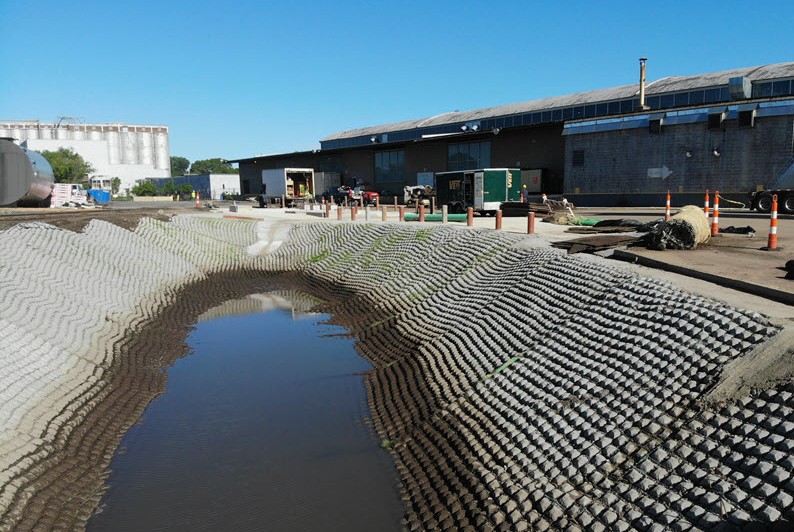
They have bioswales, rain gardens, and permeable pavements which are green infrastructure that will absorb and filter stormwater naturally and slow down the stormwater infiltration into drainage systems.
The Increasing Urban Flood Control Solution Requirement.
The pressure of the drainage networks has been increased by urbanization. The cities that were developed to support smaller human populations are today grappling with the occurrence of heavy rainfalls. The result? Submerged roads, broken structures, road accidents, and environmental risks.
Simple channel drains are no longer the only possible solutions to urban flood control. They entail holistic approach which encompasses:
- Novel hydrological modeling used to predict runoffs.
- Temporary water storage ponds (retention and detention).
- Subterranean infiltration systems of space limited spaces.
- Green roofs which lower rooftop runoff.
- Real-time flood prediction smart systems.
Such cities as Toronto and Vancouver are considering the implementation of such technologies in their sustainability plans of municipality. In this way, they would minimize the impact of floods, and increase the resilience of urban areas.
An effective flood control plan will not merely evacuate the water; it will control it in an appropriate manner. It is aimed at simulating natural water cycle as much as possible even in the concrete-dominated surroundings.
The major concepts of Stormwater treatment design.
A proper stormwater management design not only regulates the runoff water but also purifies the water before it flows back into the water bodies. There are usually three stages of the process:
1. Collection
The rain water is captured at the first stage using inlets, catch basins, and drains. The correct design will make sure that there is no waterlogged area and that the first runoff (the one that has the greatest concentration of pollutants) will be collected.
2. Treatment
The water collected is taken through natural or designed processes of sedimentation, filtration, and elimination of pollutants. At this point sustainability comes in – designs can be made using:
- Filtering vegetated swales.
- Indigenous wetlands which treat pollutants biologically.
- Heavy Traffic Oil-grit Separators.
- Pavements that are permeable and easily absorb water.
3. Discharge or Reuse
Clean water can be safely discharged into the surrounding water bodies, or it can be recycled to irrigate landscapes, cooling down or other non-portable purposes. This circular method saves freshwater resources.
Environmental Sustainability and Green Infrastructure.
The modern stormwater management is based on sustainability. Green infrastructure does not consider stormwater as waste, rather, it treats it as an asset. Such methods as rain gardens, green roofs, and bioretention cells not only regulate runoff but also enhance the appearance of urban areas, promote biodiversity and minimize the heat island effect.
With innovative engineering companies such as n Engineering, these systems are becoming increasingly popular among the Canadian municipalities due to the nature-based solutions incorporated in civil infrastructure development. Their strategy is congruent with the Canada resilience and climate-ready infrastructure.
It is also in the form of sustainable systems that decrease the cost of maintenance in the long run.
Although traditional drainage systems are made of concrete that might need cleaning or replacement every now and then, green systems can be increasingly effective as time goes on with the establishment of vegetation and maturation of soil systems.
Stormwater Modeling and Design by Data.
Successful design of stormwater treatment is always based on sound data. The advanced hydrological software engineers use to model:
- Intensity and duration of rainfalls.
- Permeability of soils and infiltration.
- Surface gradient and drainage systems.
- Catchment area characteristics
This provides a data-driven design, which cannot get under-sized (causing flooding) or over-sized (causing unnecessarily high cost). Modern cities have the ability to anticipate storms and control floods on the fly with the combination of smart sensors and IoT-based monitoring.
n Engineering Inc. uses those advanced modeling tools to create efficient, code-compliant stormwater systems to address the needs of the municipality and the environment and to optimize safety and performance in the development of urban developments.
Maintenance The Secret of Long Life.
An effective stormwater system cannot be any better than its maintenance plan. Consistently checking the pipes can make sure that they are kept clean, the vegetation grows as well, and infiltration systems work accordingly. There should be maintenance programs that involve:
- Scheduled catch basin cleaning.
- Checking of detention ponds and filters.
- Replanting and weeding of vegetated systems.
- Elimination of deposited sediments.
A proactive maintenance strategy is not only a measure to prolong the life of the system but also maintain the water quality standards at the highest level – the aspect which n Engineering Inc. pays attention to when conducting its projects throughout Canada.
Flood Control in Urban Areas of the Future.
As climate change contributes to occurrences of more and severe storms, smart, flexible, and sustainable designs will become the future of urban flood control solutions. The future of flood resilience will be characterized by integration of AI-driven predictive models, underground storage tanks, and hybrid systems that will combine natural and engineered approaches.
Community participation and the creation of awareness via the media will be important as well. Citizen education on responsible stormwater approaches (permeable surfaces, rain barrels, optimal waste disposal, etc.) can significantly increase the efficiency of the system in general.
Conclusion
Stormwater management is not an engineering activity behind-the-scene anymore; it is part of sustainable urban development. With the combination of technology, ecology, and innovation, cities become able to turn the stormwater issues into the chances of environmental betterment and resiliency.
Its emphasis on urban flood vulnerability solutions and stormwater treatment design n Engineering Inc. shows how considerate engineering can create protection to communities and re-establish the equilibrium to our water ecosystems. Such built-in, resilient cities will define the resilient cities of tomorrow as cities all over the world develop and prepare to withstand increasingly intense rainfall events.
Frequently asked questions
1. Why should stormwater be managed?
The purpose of stormwater management is to make sure that the run-off of rain or snow is under control to avoid flooding, erosion, and pollution. It makes sure that there is safe collection of water, treatment, and discharge of water back to the environment.
2. What are the solutions to urban flood control?
Urban flood management systems integrate both infrastructure (pipes, culverts, storage ponds) and green infrastructure (bioswales, rain gardens) to handle the overflow of rainwater and avoid flood events in the case of severe storms.
3. What comprises stormwater treatment design?
A stormwater treatment design will involve catchment mapping, runoff analysis, treatment facilities such as filters or wetlands and maintenance plans to guarantee performance and water quality in the long run.
4. Why should stormwater management be sustainable?
Sustainable systems are a replica of natural water cycles, increase ground water recharge, improve water quality, and decrease exposure to flood risks, all in the name of making urban resilient and protecting the environment.
Should you wish to learn further or wish to read a different trending topic, then follow the link given below to see more thought-provoking articles:- https://www.nengineering.com/what-is-stormwater-management-and-why-it-matter/